10 Dark-Sky-Friendly Lights for Outdoor Trees That Transform Your Campsite Without Harming Night Vision
By Tendai Mbatha • 30th Oct
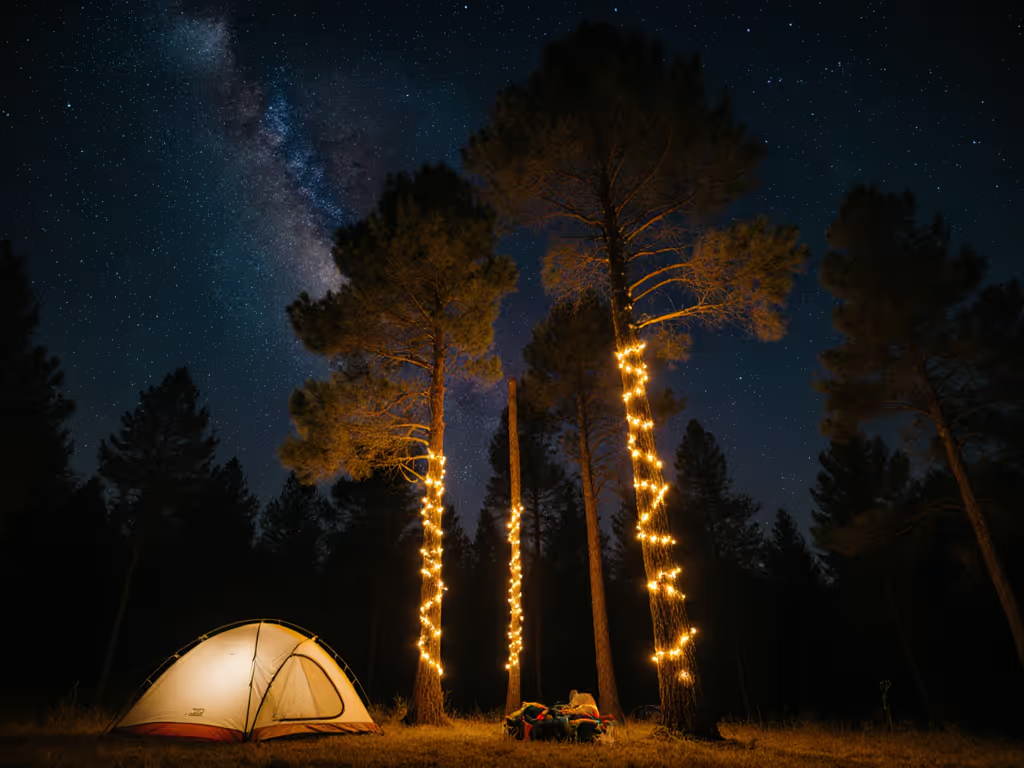
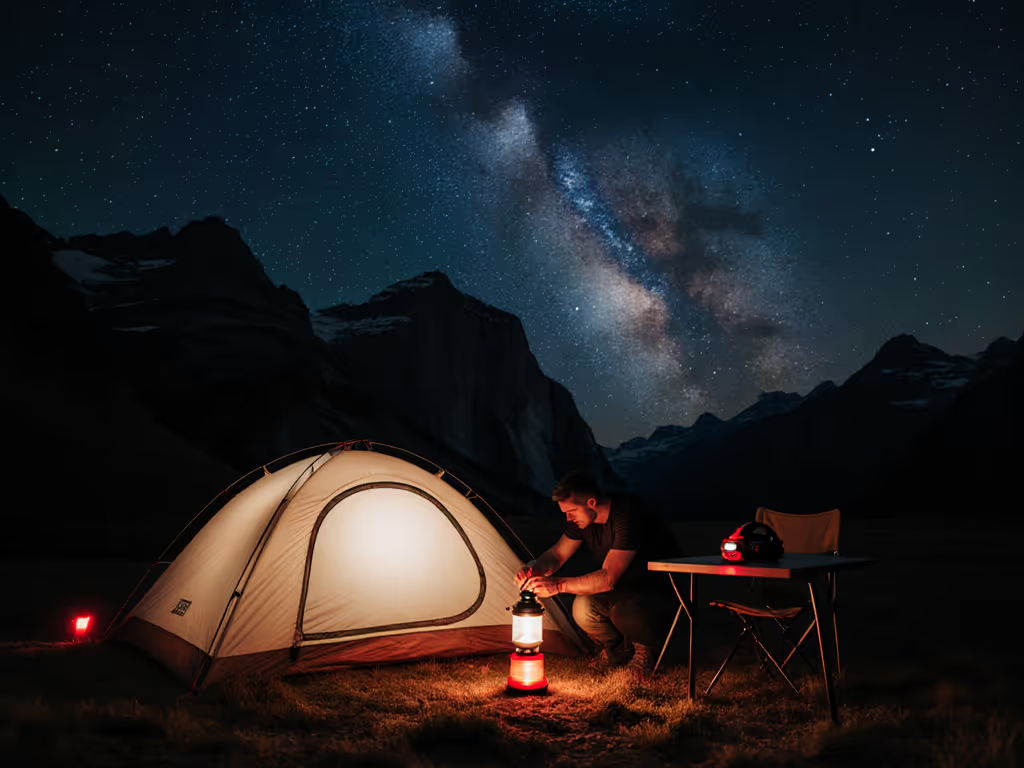
When you arrive at a site ringed by pines or cottonwoods, it is tempting to drape bright stringers everywhere, but the smartest move is choosing lights for outdoor trees that respect darkness. If you are torn between overhead string lights and lanterns, compare scenarios in our string lights vs lanterns guide. The right approach highlights bark textures, guides footsteps, and creates a warm camp glow without blasting your pupils or flooding the forest with glare. This guide unpacks the principles of dark-sky-friendly lighting with practical picks, setup tips, and clear comparisons so you can keep Orion visible overhead. Along the way, you will see how Camp Crew Lighting’s expert reviews and field-tested designs help you build an elegant, efficient tree-lighting plan that makes every night feel deeper and calmer.
Dark-sky-friendly does not mean dim and dreary, it means well-controlled, warm, and intentional. Aim for amber to extra-warm white color temperatures around 1800 to 2400 Kelvin, shield the diodes so light aims down, and use dimmers or multi-level drivers to keep output just high enough for comfort. Studies often cited by IDA (International Dark-Sky Association) show that excessive blue light scatters more in the atmosphere and can disrupt wildlife and human sleep, so keeping spectra warm helps both biology and the sky. With a few clever mounts and low-output light-emitting diode (light-emitting diode) gear, your trees can glow like lantern-lit sails while your night vision stays intact.
Why Dark-Sky-Friendly Tree Lighting Matters
Night vision is delicate, and it can take 20 to 30 minutes to fully adapt after sunset. A single unshielded bulb can reset that adaptation in seconds, which is why glare-free, downward-directed light is your friend. Research highlighted by IDA (International Dark-Sky Association) and programs within NPS (National Park Service) shows that warm light and lower brightness reduce skyglow and limit ecological disruption. For campers, that translates to safer footing, less eye strain, and more stars visible above the canopy, even when you are close to camp. Keep output modest, use narrow or shaded optics, and let shadows do the rest of the decorative work for you.
There is a battery story here too. Because your eyes are more sensitive to contrast at night, you do not need stadium-level output to feel comfortable walking or socializing. That means smaller drivers, longer runtimes, and fewer recharges. Many compact light-emitting diode (light-emitting diode) systems sip power, especially when you choose extra-warm color temperatures and a diffuser to spread light smoothly. The upshot is clear: you can protect the night, save energy, and elevate your camp’s atmosphere at the same time with a tree-first, sky-friendly approach.
10 Dark-Sky-Friendly Lights for Outdoor Trees
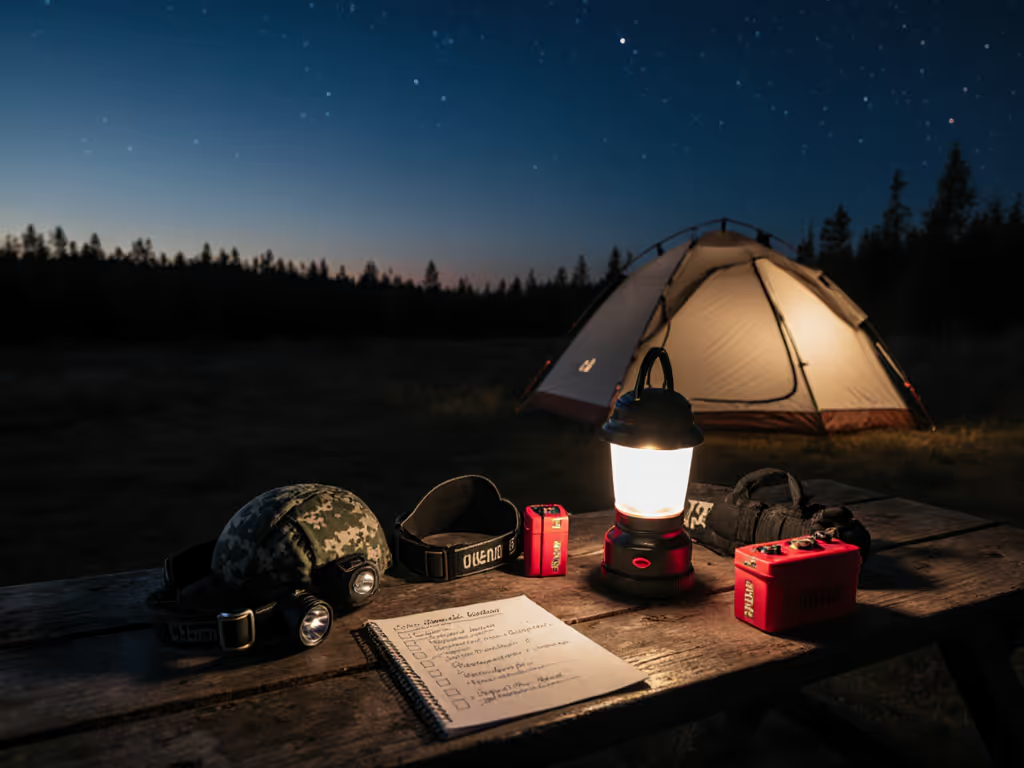
Below are ten practical, camp-ready options you can mix and match. Each pick emphasizes warm spectra, shielding, dimming, and efficient power so your trees glow softly and your sky stays dark.
Watch This Helpful Video
To help you better understand lights for outdoor trees, we've included this informative video from Jeanna Loves Christmas. It provides valuable insights and visual demonstrations that complement the written content.
1) Amber Micro-String With Inline Dimmer
- Why it works: Tiny amber light-emitting diode (light-emitting diode) nodes around 2000 Kelvin create a candlelike wash that preserves night vision.
- Best use: Wrap loosely along outer branches, then point emitters inward to avoid skyward spill.
- Pro tip: Choose a string with a true low-lumen floor and a physical dimmer, not just preset steps.
2) Warm-White Fairy Wire Inside a Fabric Sleeve
- Why it works: A cotton or ripstop sleeve turns pinpoints into a soft line of light, reducing glare.
- Best use: Zigzag between limbs to create a floating path marker above head height.
- Pro tip: Stay in the 2200 to 2400 Kelvin range for color that blends with firelight.
3) Shielded Branch Pendant Downlight
- Why it works: A small shade or hood blocks upward spill and keeps the beam below the horizon.
- Best use: Hang under sturdy limbs to pool light on the table, not the sky.
- Pro tip: Look for beam angles under 60 degrees to limit bloom.
4) Rechargeable Clip-On Downlight With Frosted Lens
- Why it works: Clips avoid bark damage, the frosted lens tames hotspots, and the head swivels down.
- Best use: Task lighting for the cook area or map reading away from the fire.
- Pro tip: Pick models with true low mode under 20 lumens and a lockout to prevent pocket activation.
5) Solar Amber Lantern With Opaque Shade
- Why it works: Diffuse, warm light collects during the day, then glows softly after dark.
- Best use: Hang waist-height where shade keeps direct view of the emitter out of your eyes.
- Pro tip: Ensure the panel is detachable so you can charge it in the sun while the lantern hangs in the shade.
6) Low-Power Rope Light Inside a Canvas Tube
- Why it works: The tube acts like a homemade diffuser, turning points into a gentle stripe.
- Best use: Frame a shared area or guide the walk to the restroom without blasting light sideways.
- Pro tip: Run at the lowest visible setting and keep runs short to save power.
7) Motion-Activated Path Pin-Spot With Hood
- Why it works: Light only when needed, and a narrow, hooded beam avoids stray spill.
- Best use: Aim at foot level on roots or steps, not into foliage or beyond the campsite.
- Pro tip: Keep motion sensitivity low to avoid false triggers from moving leaves.
8) USB (universal serial bus) Power-Bank Lantern in Warm White
- Why it works: Efficient light-emitting diode (light-emitting diode) modules powered by a bank you already carry last for nights when kept low.
- Best use: Hang inside a small paper or fabric shade under a branch to push light down and out softly.
- Pro tip: Choose lanterns with a true amber mode or a 2200 Kelvin setting for sky-friendly warmth.
9) Red-Mode Micro-Lights for Astronomy Hours
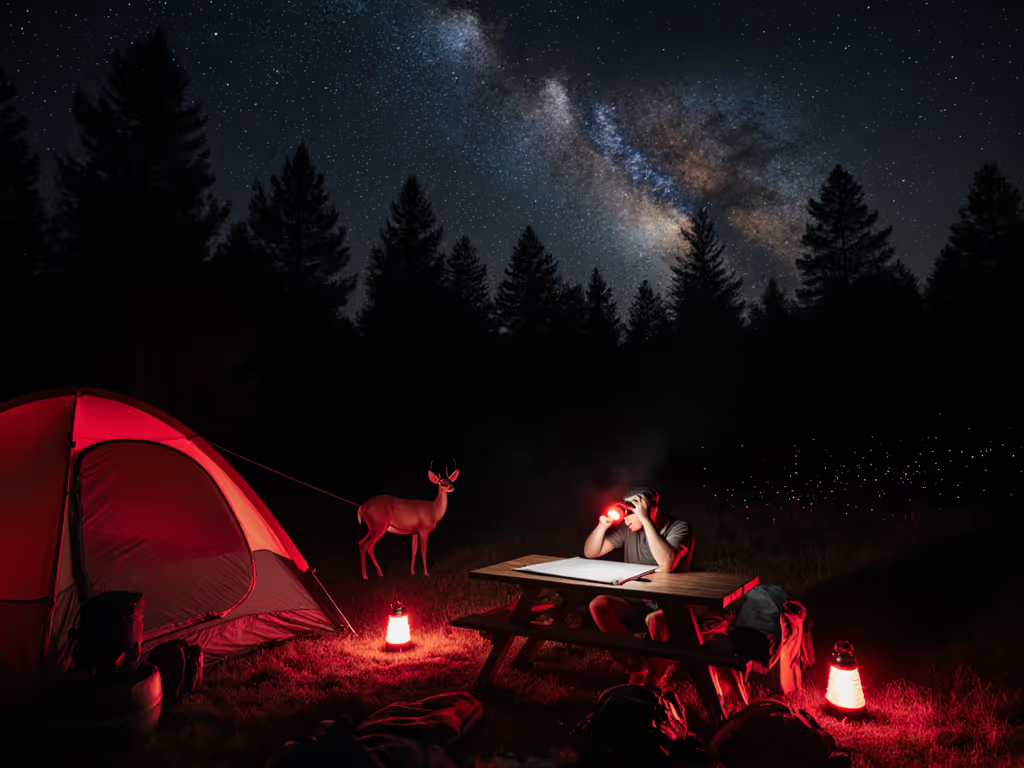
- Why it works: Red helps preserve dark adaptation for late-night stargazing or astrophotography. Understand the science of red light and sleep to use it wisely around camp.
- Best use: Very minimal markers near telescopes, never at full power, and away from wildlife corridors.
- Pro tip: Use sparingly, because any light can still distract animals and other campers.
10) Tunable Warm String With Timers and Schedules
- Why it works: You can set extra-warm correlated color temperature (correlated color temperature) and program an early lights-out to protect the night.
- Best use: Group camps that need a brief evening glow, then an automatic fade to darkness.
- Pro tip: Favor models whose lowest setting is truly low and retains memory after power cycles.
How to Choose and Position Lights for Outdoor Trees Without Harming Night Vision
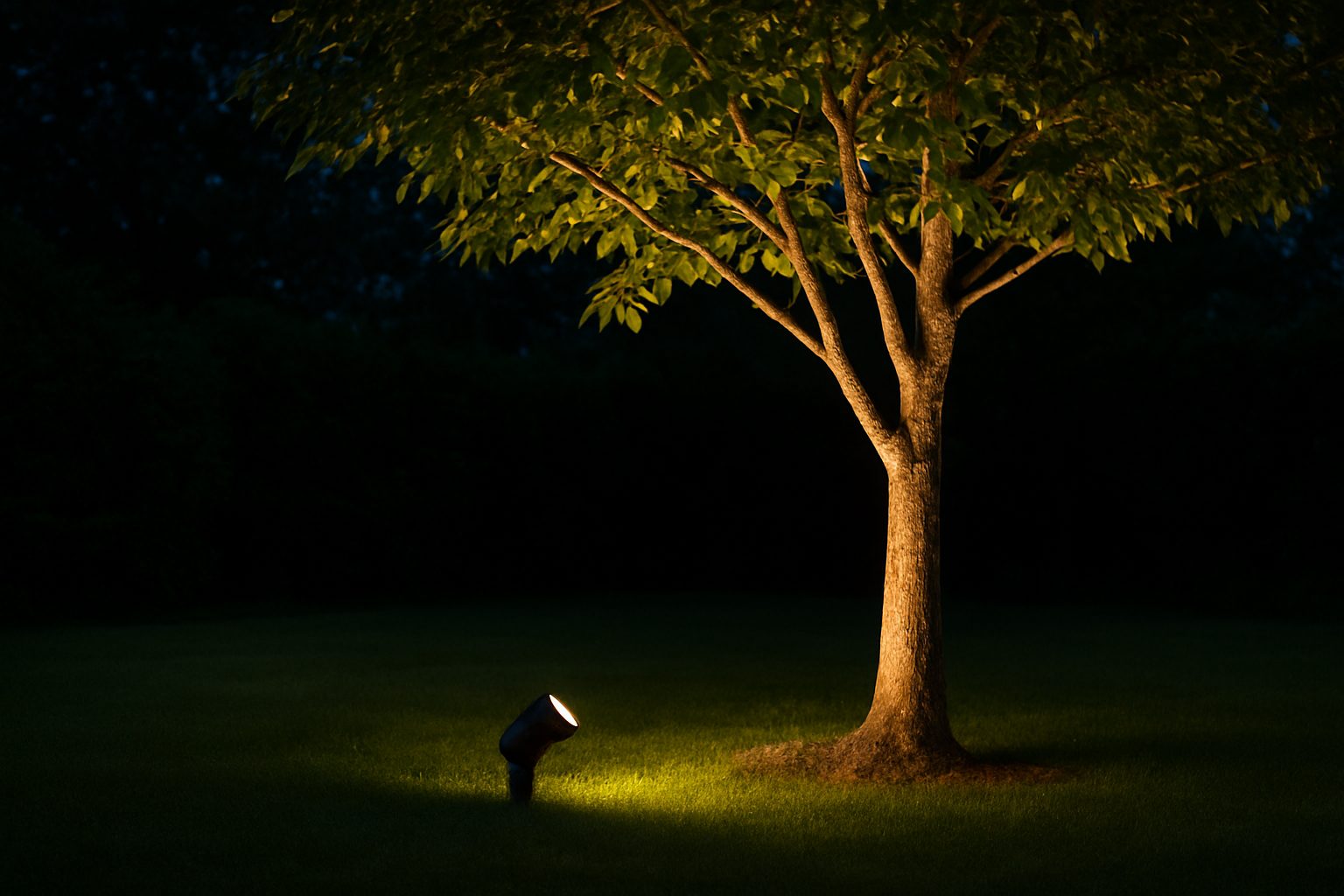
Start by deciding the job each fixture must do, then pick the smallest output that accomplishes it. Wayfinding can be comfortable at around 0.3 to 1 lux on the ground, a festive table often feels fine under 10 lux, and many campsites remain inviting at much less. Warm spectra, shielding, and placement beat raw brightness every time, so aim emitters down, hide the source behind a shade, and keep the lumen count modest. If you ever wonder, could I do this with half the light, try it, and you will likely be happier with the view of the sky.
Placement matters as much as the product. Avoid wrapping wire against living bark for long periods, and never staple into a tree. Use soft hook-and-loop straps, fabric ties, or temporary, non-abrasive hangers placed on limbs large enough to handle a slight load. Keep lights inside the canopy so foliage acts as a natural shade, and angle beams so their cutoff lands on the ground or the table, not past the perimeter. For a mental diagram, picture a bowl of light under each branch, with the bowl rim ending at your campsite edge.
- Color choice: 1800 to 2400 Kelvin reads like firelight and preserves the night mood.
- Beam control: Hoods, shades, and downward angles keep light where you need it.
- Dimming: A true low mode is more valuable than a bright high mode in camp.
- Timer discipline: Use auto-off after quiet hours to restore full darkness.
- Weather rating: Check IP (ingress protection) codes and protect connectors from dew and rain. For details on what IP67 vs IPX4 actually means at camp, see our IP rating guide.
Power, Runtime, and Battery Efficiency in the Field
Power planning is easier than it looks if you think in watt-hours and not just battery size labels. Convert capacity from milliampere-hour (mAh) to watt-hour by multiplying by nominal voltage, then dividing by one thousand, and you will know what you truly have to spend. A common 10,000 milliampere-hour (mAh) universal serial bus (universal serial bus) bank at 3.7 volts equals about 37 watt-hour in the real world. To choose the right power source, read our rechargeable vs disposable batteries breakdown. If your tree lights sip two watts on low, that one bank can run them for a full evening and beyond, especially if you schedule an early dim or lights-out to preserve the sky.
For solar setups, match panel size to your expected daily burn. A pocket-sized five-watt panel on a clear day might refill a few hours of low output, while a 10 to 15 watt panel can cover lights plus a phone top-up with margin. Keep panels in direct sun and lights under shade, and you will maximize both charge and comfort. Finally, reduce losses by using short cables, efficient drivers, and low brightness - your runtime will jump, and your neighborhood of trees will stay peacefully dim.
Quick Runtime Planner for Tree Lighting
| Power Source | Usable Capacity (watt-hour) | Light Draw on Low (watt) | Estimated Runtime (hours) | Notes |
|---|---|---|---|---|
| 10,000 milliampere-hour (mAh) universal serial bus (universal serial bus) bank | ~37 | 2 | ~18 | Reduce to 1 watt for double the hours. |
| 20,000 milliampere-hour (mAh) universal serial bus (universal serial bus) bank | ~74 | 3 | ~24 | Plenty for a weekend at low brightness. |
| Small solar panel plus internal battery | Varies | 1 to 2 | 4 to 12 nightly | Depends on sun hours and panel size. |
Head-to-Head Comparison: Tree-Friendly Options at a Glance
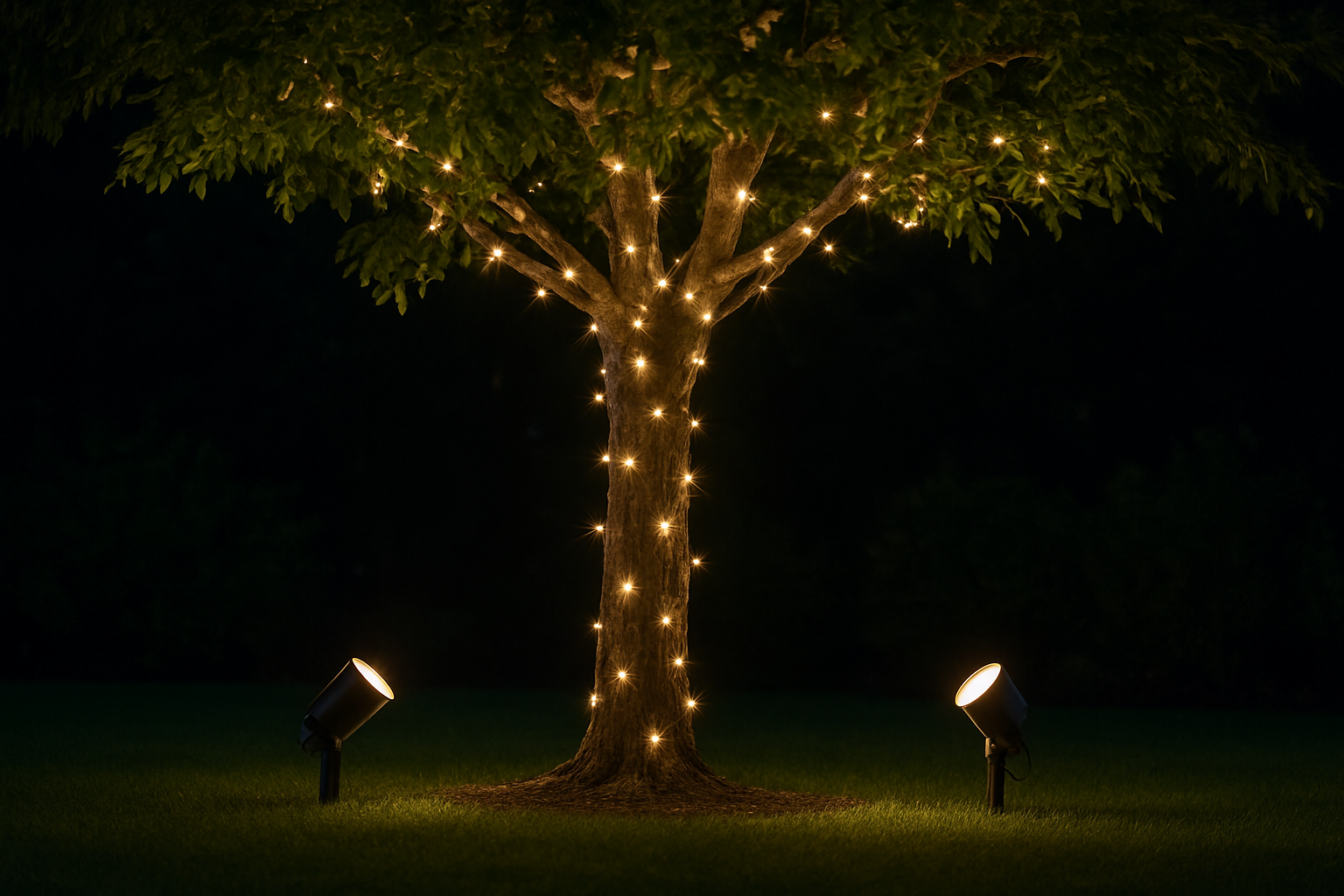
Use this table to quickly compare beam control, color, power, and use cases. When in doubt, favor warm color, real dimming, and clear shielding over raw brightness or flashy effects.
Comparison of 10 Dark-Sky-Friendly Tree Lighting Options
| Option | Beam or Shielding | Typical Brightness (lumens) | Color Temperature (Kelvin) | Power Source | Estimated Runtime on Low | Best Use | Dark-Sky Note |
|---|---|---|---|---|---|---|---|
| Amber Micro-String + Dimmer | Point inward, natural foliage shade | 10 to 60 | 1800 to 2100 | Battery or universal serial bus (universal serial bus) | 10 to 20 hours | Atmosphere, path hint | Very low blue output, excellent for stars. |
| Fairy Wire in Fabric Sleeve | Fully diffused line | 20 to 80 | 2200 to 2400 | Battery or universal serial bus (universal serial bus) | 8 to 16 hours | Perimeter outline | Diffusion reduces glare and hotspots. |
| Shielded Branch Pendant | Hooded, downward-only | 40 to 150 | 2000 to 2400 | Rechargeable battery | 6 to 12 hours | Table or cook area | Cutoff keeps beams below the horizon. |
| Clip-On Downlight, Frosted Lens | Tilting head, frosted diffuser | 20 to 120 | 2000 to 2700 | Rechargeable battery | 6 to 18 hours | Task zones | True low mode preserves night vision. |
| Solar Amber Lantern | Opaque shade, soft glow | 10 to 60 | 1800 to 2200 | Integrated solar | 4 to 12 hours | Ambient tree glow | Auto-off schedules help dark hours. |
| Rope Light in Canvas Tube | Textile diffusion | 30 to 120 | 2200 to 2400 | Battery or universal serial bus (universal serial bus) | 6 to 14 hours | Guideline lighting | Soft edges, minimal spill sideways. |
| Motion Path Pin-Spot | Narrow beam, hooded | 10 to 80 | 2000 to 2400 | Battery with sensor | Days to weeks | Footing highlights | Only on when needed reduces skyglow. |
| Universal Serial Bus (universal serial bus) Bank Lantern | Fabric shade, downward bias | 20 to 150 | 2000 to 2400 | Universal serial bus (universal serial bus) power | 10 to 30 hours | Shared spaces | Use amber mode for best results. |
| Red-Mode Micro-Lights | Very low, localized | 1 to 10 | Red spectrum | Battery | 20 to 60 hours | Astro tasks only | Use sparingly to respect wildlife. |
| Tunable Warm String, Scheduled | Diffused, programmable | 10 to 100 | 1800 to 2400 | Battery or universal serial bus (universal serial bus) | 8 to 16 hours | Group camps | Timers restore darkness after quiet hours. |
Camp Crew Lighting: Reviews, Guides, and Custom Designs That Put Dark Skies First
Camp Crew Lighting exists to solve a problem you have probably felt: traditional camp lights blow out your vision, devour batteries, and wash the night in glare. Our team publishes comprehensive reviews of camping lighting products, pitting similar options against each other in head-to-head evaluations so you can see which ones truly dim low, shield well, and run efficiently. We design complete, dark-sky-friendly systems that prioritize warm spectra, tight beam control, and minimal spill, and we explain setup step by step with diagrams you can follow in minutes. Whether you car camp with family or gear up for a star party, we curate recommendations by price, activity, and user needs so you get a setup that fits like a glove.
Consider a recent reader project: a four-site group wanted a festive feel without disturbing nearby wildlife. We proposed amber micro-strings for each tree canopy, two shielded pendants for shared tables, and motion pin-spots for steps, all run off a pair of universal serial bus (universal serial bus) banks with auto-off timers. The result was a cozy glow with no visible bulbs and zero complaints about glare, plus battery life that lasted the whole weekend. That is the kind of balanced, field-tested solution Camp Crew Lighting aims for - preserving the night environment, reducing glare, extending runtime, and elevating the overall camping experience with tailored recommendations and clear maintenance guides.
What sets our reviews apart is the focus on real low-mode performance and true warm color. Many lights list a low setting that is still too bright for a dark site, or they claim warm white but sit closer to 3000 Kelvin. We measure, photograph, and compare across the things that matter for the night: cutoff quality, lowest stable output, color accuracy, and efficiency. Then we show you how to mount gently without harming trees, how to weatherproof connections, and how to pack a compact, reliable kit that keeps your skies calm and your camp inviting.
Ready to explore which setup will flatter your pines or oaks without stealing the stars? Our buying guides, setup tutorials, and maintenance checklists give you the confidence to choose and deploy with ease. And when you want a second opinion, our head-to-head comparisons and feature evaluations break down the tradeoffs in plain language, saving you time and money.
These ten ideas prove that you do not need much light to make a big impact. In fact, the softer and more controlled your glow, the richer your night feels and the longer your batteries last. If you are curious which combination suits your favorite trailhead or music festival ground, Camp Crew Lighting has the deep dives and quick-start guides to help you get there fast.
Finally, a few best practices from our how-to playbook:
- Use soft straps or twine, never nails or staples, and remove everything at tear-down.
- Keep emitters below eye level or hidden behind shades, and point beams to the ground.
- Set timers to fade early, and let the campfire be your brightest light late at night.
- Choose warm color, true dimming, and efficient power before any decorative effects.
With these principles, your trees become part of the lighting system, shaping a calm pool of light that protects the sky. And with Camp Crew Lighting’s guidance, you can choose confidently and install quickly, whether you are solo under the pines or hosting a reunion under giant sycamores.
Curious how these ideas scale to a festival campsite or a scout outing? Check our curated recommendations by budget, activity, and group size, then use our printable diagrams to mark anchor points and cable runs. The result is a campsite that feels designed, not improvised, that looks great in photos yet disappears into the night when you are ready for stars.
Conclusion
Subtle, warm, and well-aimed light lets your trees glow while your stars stay bright. In the next 12 months, more campgrounds will adopt quiet-hours lighting standards, making thoughtful, low-glare setups a practical advantage for every group. What will your first night feel like when you swap harsh bulbs for truly dark-sky-friendly lights for outdoor trees that keep the sky as your ceiling?
Additional Resources
Explore these authoritative resources to dive deeper into lights for outdoor trees.
Transform Lights for Outdoor Trees with Camp Crew Lighting
Get dark-sky-friendly guidance that preserves night skies, cuts glare, extends battery life, and elevates camps for campers and festival-goers through comprehensive reviews of camping lighting products.
Related Articles