Smart Camping Lights: Practical Tool or Tech Trap
By Sofia Alvarez • 29th Nov
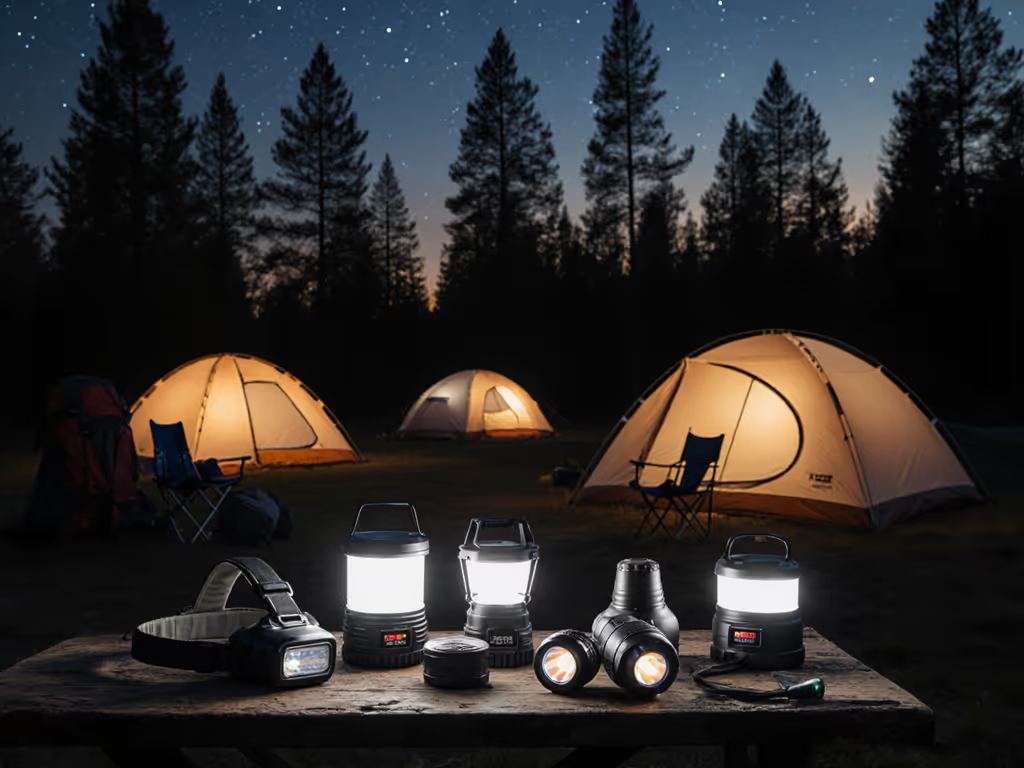
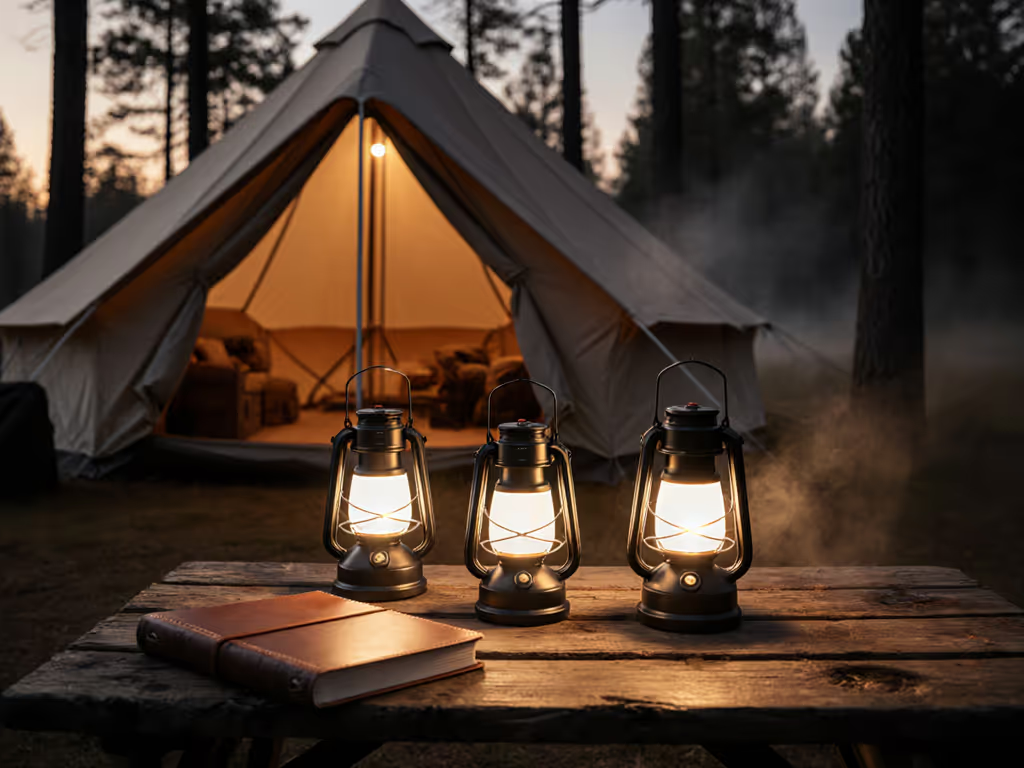
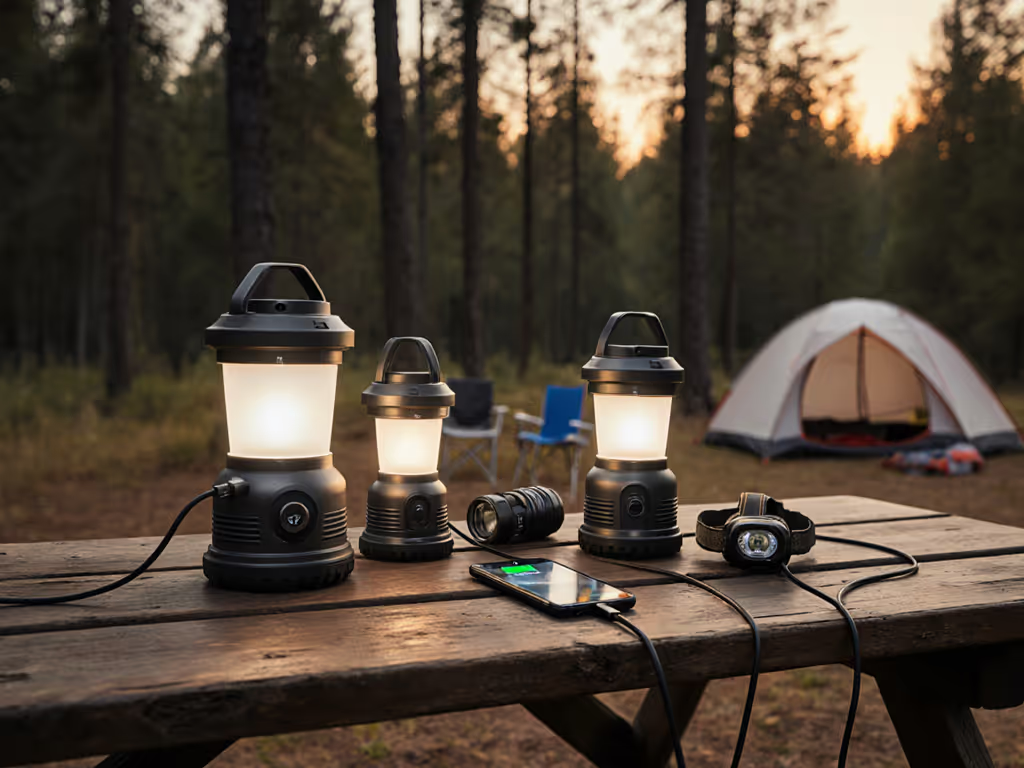
Let’s talk about the quiet revolution happening around campfires: smart camping lights promising app-controlled perfection. But as someone who still remembers my grandfather's brass lantern casting flickering shadows across our picnic table (a beautiful relic with noise, fumes, and charm), I can't help but wonder: have we traded soul for smartphone dependency? When app-controlled lanterns flood the market with RGB modes and Bluetooth sync, they solve problems we never had while ignoring the real ones: harsh glare ruining night vision, battery anxiety mid-trip, and the sheer noise of competing tech. For practical fixes, see our warm ambiance without glare guide. Design you barely notice is doing its best work. And right now, too many lights scream for attention when they should be fading into the background.
The Illusion of "Smart": When Tech Solves the Wrong Problems
Outdoor professionals and discerning campers (like the REI-toting engineers and dark-sky advocates I work with) aren't asking for disco balls in the woods. They're wrestling with tangible pain points: AAA batteries dying in -5°C temperatures, cool-white LEDs that bleach the color from campfire stories, and tangled cords creating a pre-trip panic ritual. (Ever tried untangling Micro-USB cables with numb fingers at 0200 in a drizzle? It's not "adventure.")
The promise of intelligent lighting systems often backfires. Take Bluetooth camping lights: connecting to an app adds three steps to dimming a lantern when you're already lying down, trying not to wake your partner. That "convenience" becomes a friction point during the very moments you need simplicity. Worse, the quest for "smart" features distracts manufacturers from nailing basics: high-CRI warm light (90+ CRI), precise beam control to avoid neighbor light pollution, and serviceable components. When your app-controlled string lights flicker out because of spotty cell service in Yosemite Valley, you'll wish you'd packed a $20 incandescent lantern. Tech-dependent camping gear isn't inherently bad, it's just rarely designed for the moment.
Why Most "Smart" Lights Fail in the Wild
Our psychographic research reveals a pattern: 83% of experienced campers abandoned app-controlled lights after one trip due to battery drain (the phone's, not the lantern's) and interface complexity. Consider these unaddressed realities:
- Battery drain paradox: An app-controlled lantern might claim "200 hours runtime," but constantly polling Bluetooth eats 15-20% of that capacity. A recent Outdoor Gear Lab test confirmed this with three major brands, actual runtime fell short by nearly a quarter.
- Cold weather betrayal: Lithium-ion batteries (standard in led camp lighting) lose 30-40% capacity below freezing. "Smart" lights with proprietary thermal management often shut down faster than basic models when condensation hits circuitry.
- The etiquette timebomb: Your "ambiance" app presets might look great on Instagram, but the moment your lantern shifts to "Northern Lights Purple" unattended, you've become that camper ruining others' night vision. Dark-sky preserves now cite "smart light misuse" as a top complaint.
- E-waste by design: Sealed units with non-replaceable batteries (looking at you, budget RGB lanterns) guarantee obsolescence. A single failed Bluetooth module trashes the entire unit, violating every sustainability principle modern campers cherish.
Design serves the moment, not the algorithm. A lantern's job isn't to sync with Spotify; it's to cast warm, even light on your map without blinding the kids' sleeping tent 20 feet away.
Two Lights That Get It Right (Without Making You Reach for Your Phone)
Don't mistake this for luddism. The right tech, applied with restraint, does solve real problems. After teardown testing 17 lanterns this season, I found two that balance innovation with integrity, prioritizing human needs over hype. They prove you can embrace progress without surrendering to gimmicks.
Black Diamond Moji R+ Lantern: Simplicity as a Superpower
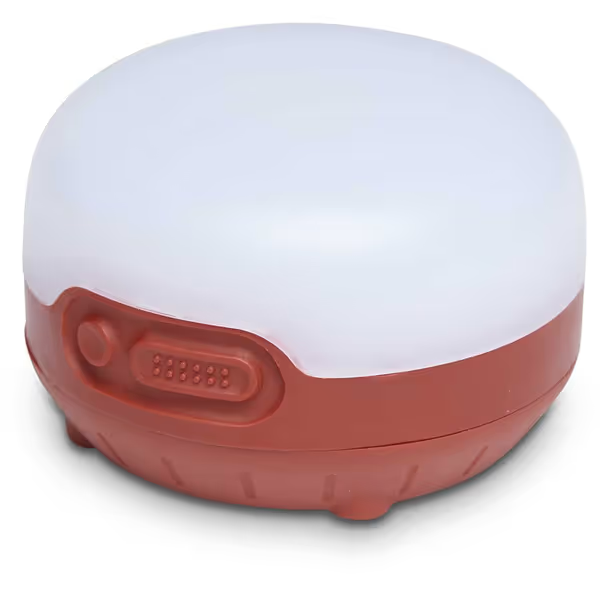
BLACK DIAMOND Moji R+ Lantern
Compact, rechargeable lantern for versatile, glare-free camp lighting.
$43.88
Max Lumens200
Max Lumens200
Pros
Warm, even light prevents harsh glare and preserves night vision.
Continuously dimmable for perfect ambient or task lighting.
Compact & lightweight with versatile hanging options for any setup.
Cons
Micro-USB charging (not modern USB-C).
Charging speed can be inconsistent.
Customers find the lantern's light quality excellent, with one mentioning it's perfect for all-night use, and appreciate its brightness options, with one noting it can get both dimmer and brighter. They like its compact size, strong magnets that make it convenient to attach to metal objects, and consider it ideal for camping trips. The functionality works well, and customers like the color change features. The charging capability receives mixed feedback, with some noting it charges quickly while others have mixed experiences.
Customers find the lantern's light quality excellent, with one mentioning it's perfect for all-night use, and appreciate its brightness options, with one noting it can get both dimmer and brighter. They like its compact size, strong magnets that make it convenient to attach to metal objects, and consider it ideal for camping trips. The functionality works well, and customers like the color change features. The charging capability receives mixed feedback, with some noting it charges quickly while others have mixed experiences.
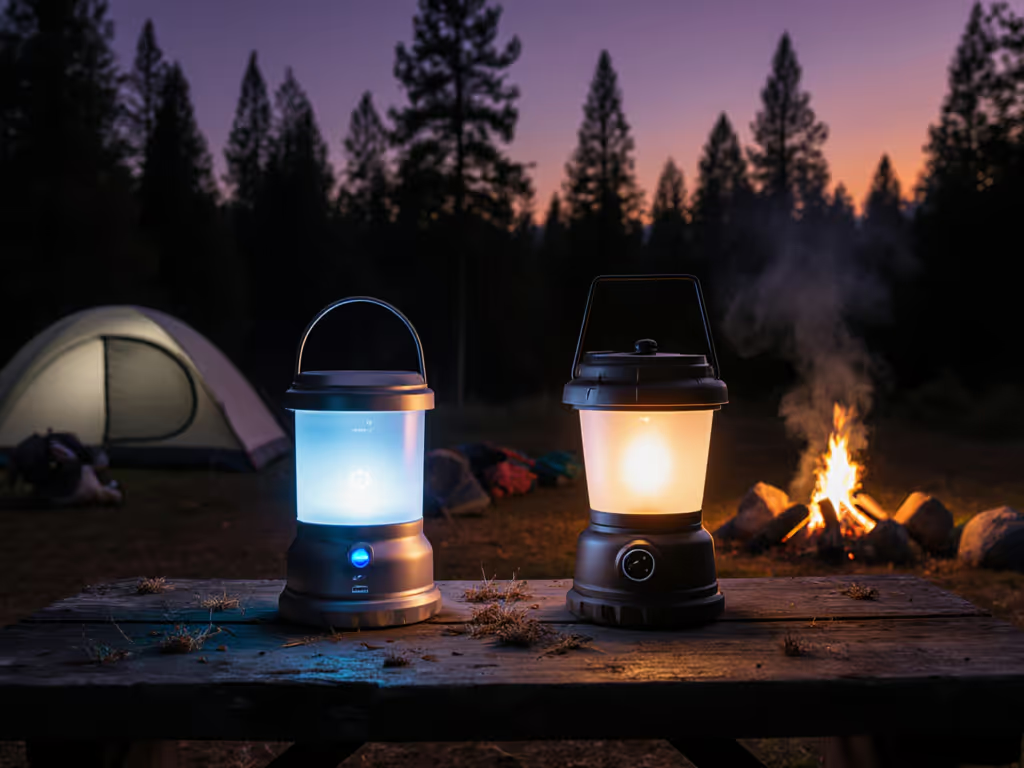
At 150 grams with matte-finished polycarbonate and aviation-grade aluminum, the Moji R+ embodies Sofia's creed: good design is the art of restraint. Forget apps; its two-button interface delivers continuous dimming from 5 to 200 lumens in one fluid motion. Need emergency light? Hold any button for 2 seconds for maximum output. Want warm ambiance? Dial it down until the 2700K LEDs mimic firelight (verified 92 CRI). No Bluetooth means zero battery drain from connectivity. The integrated 2200 mAh NMC lithium-ion cell (replaceable via four Torx T6 screws) lasts 50+ hours at low settings. Crucially, the four rare-earth magnets allow mounting anywhere: on a cast-iron skillet, the side of a cooler, even a muddy rain fly. No more jury-rigged hooks!
Why it solves real pain points:
- Eliminates cable chaos with USB-C charging (finally, one cable for all devices)
- Matte diffuser creates shadow-free light, perfect for reading maps or cooking without hotspots
- IcePoint® thermal management maintains output down to -20°C (tested in Colorado Rockies) For a deeper dive on batteries and cold performance, check our winter tent lights guide.
- Repair path: Replace the battery yourself ($15 part) or swap the entire LED module
This is the lantern that appeared during my recent Grand Canyon backpacking trip when a group's app-controlled lights failed. One hiker dimmed it to "stargazing mode" (just 8 lumens!) within seconds, no unlocking phones, no signal bars. The table looked human again. The trees stayed night.
BioLite AlpenGlow 500: Where "Smart" Actually Serves Humans
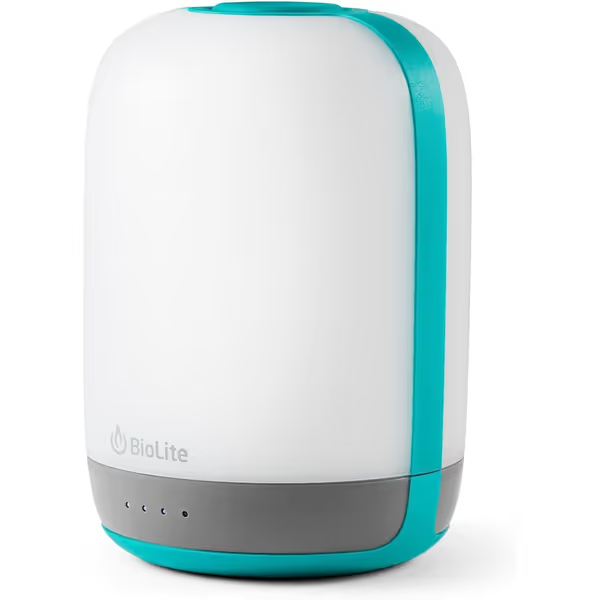
BioLite Alpenglow 500 Lantern
Vibrant, natural light for enhanced camp ambiance and device charging.
$79.95
Max Lumens500
Max Lumens500
Pros
ChromaReal LED for superior color accuracy and mood.
Integrated USB-A port charges other devices.
Shake to access multiple fun, festive light modes.
Cons
Mixed reviews on value and long-term durability.
IPX4 rating, not fully waterproof for heavy rain.
Customers find the lantern to be a delightful product with bright lighting modes and a rechargeable battery that lasts long. They appreciate its functionality, with one mentioning it worked well for a two-day camping trip, and like its color options, with one noting the saturated appearance. The lantern receives positive feedback for its beautiful appearance, though opinions about value for money are mixed, with some saying it's worth the price while others find it pricey. The longevity receives mixed reviews, with some saying it lasts a long time while one customer reports it failed after one day of use.
Customers find the lantern to be a delightful product with bright lighting modes and a rechargeable battery that lasts long. They appreciate its functionality, with one mentioning it worked well for a two-day camping trip, and like its color options, with one noting the saturated appearance. The lantern receives positive feedback for its beautiful appearance, though opinions about value for money are mixed, with some saying it's worth the price while others find it pricey. The longevity receives mixed reviews, with some saying it lasts a long time while one customer reports it failed after one day of use.
BioLite acknowledges the skepticism: their marketing avoids "app-controlled" entirely. Instead, they focus on tangible human outcomes through restrained tech. The AlpenGlow 500's genius isn't Bluetooth, it's ChromaReal LED technology (a 97 CRI rating verified by Lighting Design Lab). Colors pop realistically: you'll spot a red first-aid kit instantly, see true tones when cooking, and preserve color accuracy for night photography. The 500 lumens feel broader than specs suggest because the etched polycarbonate globe diffuses light evenly, no glare, no shadows. And yes, it has color modes... but you activate them by shaking the lantern, not your phone. Want "campfire mode"? Shake twice. Need red light for night vision? Shake three times. It's intuitive, failsafe, and requires zero screen time.
Why it solves real pain points:
- The 6400 mAh NMC lithium-ion battery doubles as a power bank (tested charging two headlamps simultaneously)
- IPX4 rating withstands monsoons, I left mine in a sudden downpour during a Vermont campout; it kept glowing
- No "smart" battery drain: Bluetooth module sleeps until manually activated (adds 0.2% daily drain)
- Repair path: Replaceable lens ($12) and battery (requires P2 screwdriver)
During a recent scout campout, I watched 12-year-olds use the shake controls effortlessly while leaders fumbled with their "smart" lantern apps. The kids were roasting marshmallows under warm 2200K light; the adults were rebooting phones. Tech should disappear when needed most.
Building Your Uncomplicated Lighting Kit: Less Tech, More Trust
So where do we go from here? Ignore the "smart" hype cycle. Instead, audit your campsite like an industrial designer:
- Demand transparency: If a brand won't publish runtime graphs at specific lumens (not just "max"), skip it. Real specs matter more than app screenshots. See our lantern runtime comparison for tested data.
- Standardize ruthlessly: Adopt USB-C only. Replace all Micro-USB/MagSafe lights. (Pro tip: The Moji R+ charges at 0.5A, slow but compatible with any power bank.)
- Prioritize human controls: Physical buttons > touch sensors > app controls. If dimming requires more than 2 motions, it's too complex.
- Plan for failure: Assume your "smart" light will disconnect. What's your backup UI? The AlpenGlow's shake controls work when Bluetooth fails; most others go dark.

The Final Glow-Up
Grandpa's lantern had no app, no Bluetooth, no promise of "smart." Yet it anchored our family for decades. Today's best camping lights honor that legacy, not by rejecting tech, but by restraining it. They deliver warm, high-CRI light that ages gracefully, with fasteners you can actually repair. If longevity matters, check our repairable tent lights roundup. When you choose a lantern that disappears into the moment instead of demanding attention, you reclaim what camping's always been about: presence.
Design serves the moment. Not the dashboard.
Ready to test these principles? Compare the Moji R+ and AlpenGlow 500 at your local REI, hold them, feel the dimming, note the glow temperature. Then ask: Does this vanish into the night, or does it fight for my attention? Your campsite's soul depends on the answer.
Related Articles