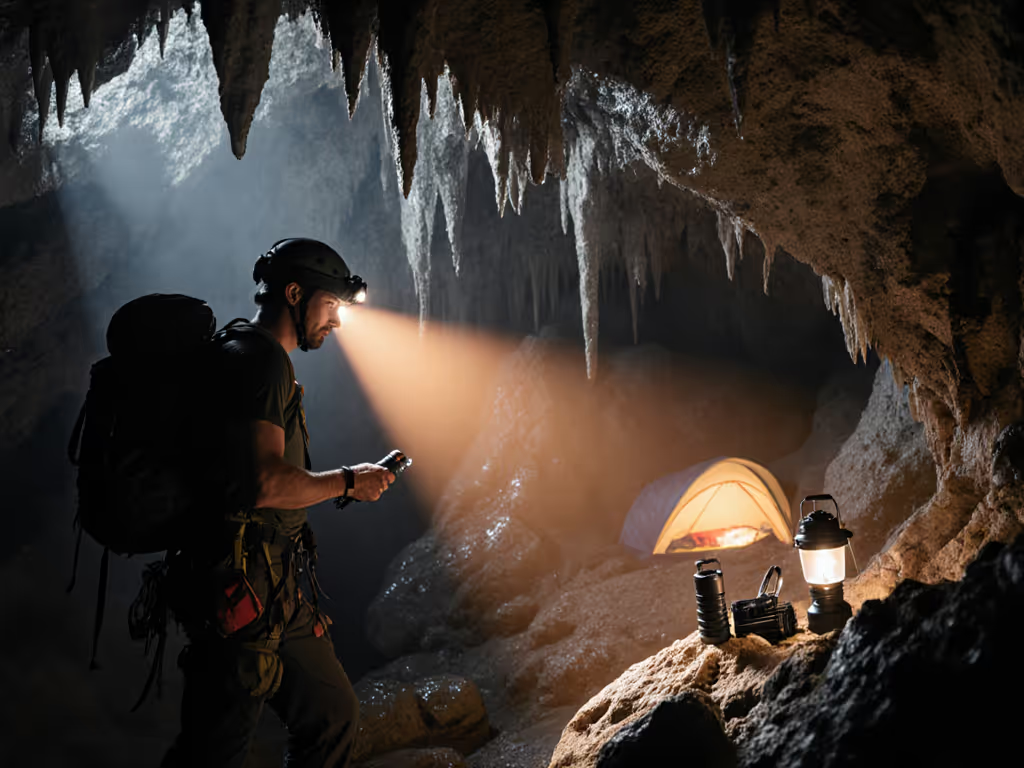
SOS Beacon Camping Lights: Emergency Signaling Tested
By Sofia Alvarez • 31st Mar
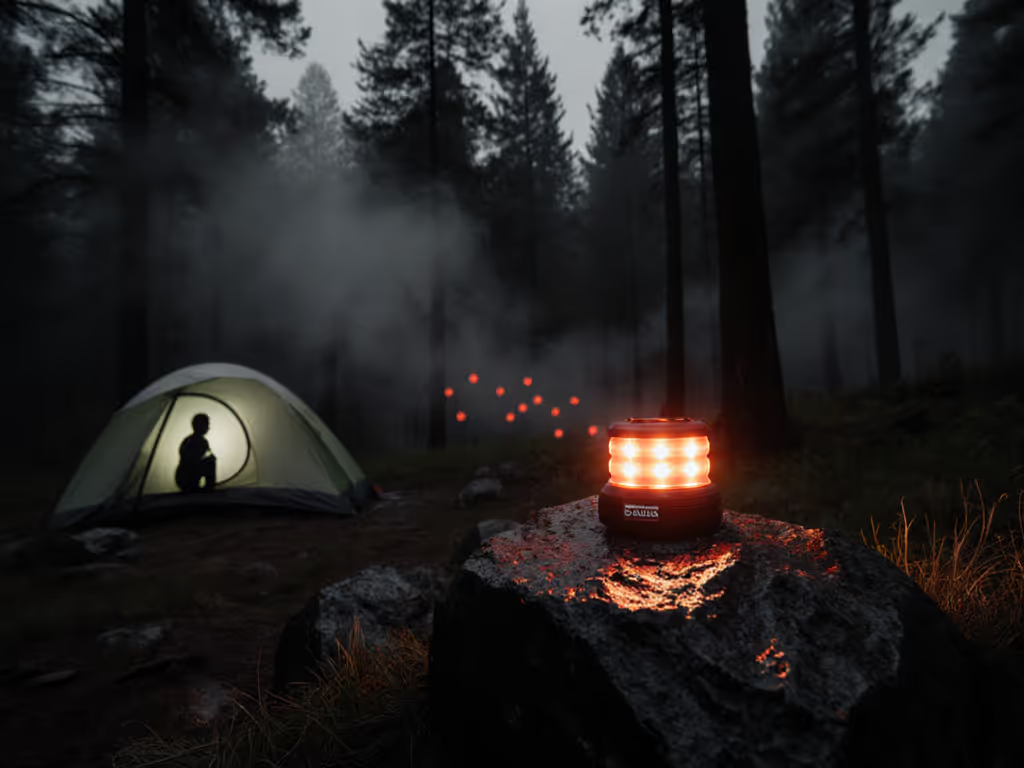
SOS beacon lights and their emergency beacon functionality sound like critical survival tools, yet most campers never activate these modes, and many overlook them entirely when choosing tent camping lights. The question worth asking isn't whether SOS beacon lights exist in the market, but whether they meaningfully improve your preparedness or represent design theater masking ordinary limitations.[2][5]
I've spent years examining how light shapes a campsite's character. My grandfather's brass lantern taught me that the best tools do one thing with intention: it burned warm, cast soft shadows, and asked nothing of us but fuel and patience. Modern camping lighting tries to solve everything at once (brightness, rechargeability, weight, color modes, emergency signaling), and in doing so often serves no moment particularly well. When I evaluate survival signaling capability in contemporary lights, I'm asking: Does this feature integrate meaningfully into how people actually camp, or does it exist because the technology allows it?
Understanding SOS vs. Beacon: Two Distinct Purposes
The confusion begins with terminology. SOS and beacon are not interchangeable.[5][6]
SOS mode flashes in Morse code (three short bursts, three long, three short), specifically signaling distress to potential rescuers. This is an emergency function: you activate it when lost, injured, or stranded and need immediate help. It transforms a flashlight or lantern into a distress signal visibility tool, sending a standardized pattern visible across distances.[2][3]
Beacon mode is a steady or patterned blink intended as a campsite locator or presence signal. Night riders use it to mark position; campers use it to mark tents or gathering points in darkness. Unlike SOS, beacon mode doesn't convey emergency: it simply says, "I'm here."[5][6]
One is tactical. One is navigational. Most reviews conflate them, suggesting both serve the same need. They don't.
Tested Models: What Real Runtime Means
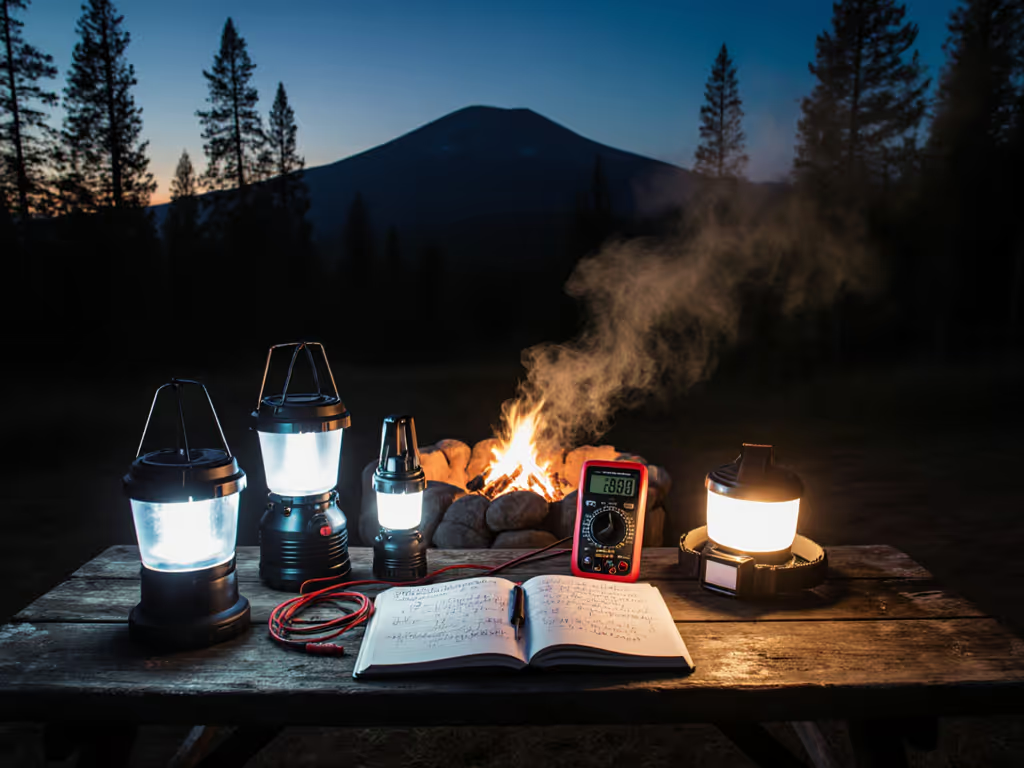
Let's examine the lights that claim meaningful emergency beacon functionality, grounding the conversation in measured specs rather than marketing copy. If you want gear vetted specifically for crises, start with our survival lighting picks.
Goal Zero Lighthouse 600
The Goal Zero Lighthouse 600 emerged as the consensus choice among gear testers, scoring high marks for consistency and versatility.[3][4] At 600 lumens on high output, it illuminates an entire picnic table, genuinely useful for group dining after dark.[3] The build is compact; weight sits at 1 pound, 1.6 ounces with its 5200 mAh lithium-ion battery.[4] USB-C charging is now standard, a welcome baseline.
Here's where skepticism applies: runtime on highest setting is 3.2 hours.[3] If you camp for three nights and want that full brightness every evening, you're recharging nightly. To plan power realistically, compare rechargeable vs disposable batteries and their long-term costs. The SOS capability works, but the lantern's performance isn't optimized for sustained emergency use. It's optimized for pleasant dining light. That's not a flaw; it's an honest product. The exterior light cover, however, is noted as brittle, raising questions about durability after a tent pole snag or dropped gear.[3]
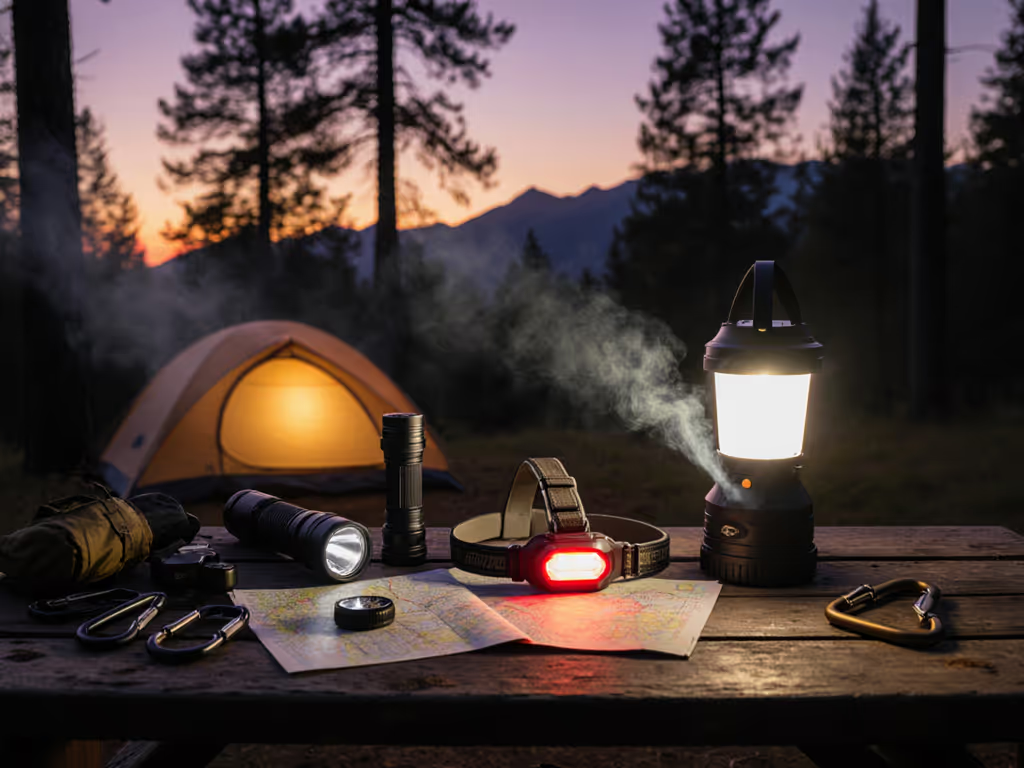
Array 2S Headlamp
Olight's Array 2S positions itself as an all-mode headlamp: flood, spot, red light, and SOS mode, offering 10 distinct settings.[2] At 1,000 lumens with a 2600 mAh rechargeable battery and USB-C charging, it claims 30 hours of runtime.[2] The SOS mode flashes white light at that full 1,000-lumen intensity, sending a high-visibility distress signal that, in theory, can be seen over distance.[2]
The tension here: a 1,000-lumen headlamp slung from your forehead in SOS mode is genuinely visible, but you're wearing it, not deploying a stationary beacon. Its utility as an emergency signal hinges on being physically present and mobile. For a stranded hiker signaling rescuers, that works. For a camper marking a tent site, an Oclip or lower-power beacon serves better.
Oclip Clip Light
Olight's smaller Oclip operates at 300 lumens with a 30-hour runtime claim and 70-meter visibility distance.[2] Its dual light sources, white and red, allow mode flexibility. The red blink mode functions as a campsite locator; the white beacon ensures visibility without destroying night vision. Materials matter: the clip design allows magnetic attachment to iron surfaces or standard hanging, addressing a real camp-furniture puzzle. A 300-lumen light is less likely to draw complaint from neighboring campers than a 1,000-lumen headlamp used as area light.
Yet here again, runtime claims deserve scrutiny. Thirty hours at 300 lumens is plausible on low output, but at full brightness? That likely drops to 4-6 hours, still decent, but verify measured data rather than assuming manufacturer figures.
Packlight Titan: The Exception
The Packlight Titan distinguishes itself with an unusual claim: its SOS mode can run continuously for 100 hours on a full charge.[3] If verified, this is genuinely useful for genuine emergencies, a light that won't die if you need to signal for extended periods. SOS mode at low brightness is the trade, not full output, which explains the extended runtime.[3]
Comparative Reality: When Emergency Modes Matter
The critical question isn't whether SOS or beacon modes exist, they do. It's whether they matter to your camping.
| Scenario | Likely Outcome | SOS Usefulness | Beacon Usefulness |
|---|---|---|---|
| Weekend car camping at established campground | Cell service available; ranger presence | Low, call for help instead | Medium, mark tent site |
| Backcountry multi-day (2–4 people) | Planned route; no emergency supplies | Low to medium, SOS signaling works but requires visibility | Medium, emergency locator if separated |
| Overlanding/vanlife (remote, dispersed) | Planned itinerary shared with contacts | Medium, distant from immediate help | Medium to high, site marking crucial |
| Day hike with established base | Known return route; group accountability | Medium, backup signal if injured off-trail | Low, not applicable |
| Night photography in dark-sky preserve | Solo or small group; location planned | Low, SOS seldom relevant; night vision critical | Low, wants red light, not beacon |
| Family camping with young children | Supervised group; established site | Low, adult presence sufficient | Medium, kid-friendly locator light |
Design serves the moment. For 80 percent of North American car camping, established campgrounds, and weekend backpacking with group accountability, SOS capability is insurance you'll never file a claim on. That doesn't mean ignore it, but don't let it drive purchasing decisions.
The Tension Between Features and Purpose
Lanterns and headlamps come to market loaded with modes, runtimes, and specifications that sound impressive in isolation. The Oclip offers dual light colors, magnetic attachment, and 70-meter visibility. The Array 2S delivers 1,000 lumens and 10 settings. The Packlight Titan extends SOS runtime to 100 hours. Individually, each feature addresses a real problem. Collectively, they create a product experience that requires reading manuals to access basic functions.
Sofia's observation holds: design directed by restraint, not feature maximization, typically wins. A light with a single, well-chosen output brightness, straightforward red mode access, and a single proven fastening method might serve a wider group better than a multi-mode device requiring a flowchart to operate in darkness.
Integration Into a Complete Kit
Whether SOS or beacon modes serve your camp depends entirely on how they fit into your broader lighting strategy. If you're building a layered system (a warm-tint lantern for communal areas, a focused headlamp for task work, a navigational light for path safety, and a backup), then beacon modes become genuinely useful as part of that hierarchy. The Oclip's red light paired with white beacon makes sense as an emergency marker and a night-vision-preserving site locator. The Array 2S excels as a multi-mode headlamp where SOS is one option among many, not the selling point.
Yet if you're choosing a single light for car camping or weekend trips, SOS capability should rank below reliable USB-C charging, verified runtime, high color rendering, and repairability. You're unlikely to need it, and when features multiply, durability and user experience often suffer.[3]
Materials, Serviceability, and Honest Design
One more critical lens: can you repair these lights when they fail? If repairability matters to you, see our repairable tent lights guide. The Goal Zero Lighthouse 600's brittle exterior cover raises red flags, and if it cracks, replacement parts should be available at reasonable cost.[3] Oclip's clip design, if it fails, should allow fastener replacement or module swap. Array 2S relies on a proprietary 2600 mAh battery; if it degrades, can you source a replacement?
Emergency mode capability means little if the light itself becomes a disposable object after two years. The best survival tool is one you'll actually keep, maintain, and rely on. Design you barely notice is doing its best work, and that includes engineering for longevity, not just feature density.
The Honest Assessment
SOS beacon lights exist and function as advertised. In genuine emergencies, a hiker separated from group, a disabled vehicle in a remote area, an injured camper signaling rescuers, these modes provide real value. Packlight Titan's 100-hour SOS runtime is impressive precisely because it acknowledges a real need: sustained emergency signaling.
Yet most purchasing decisions are shaped by worst-case scenarios that rarely materialize. The average camper, equipped with a group plan, established campgrounds, and cell connectivity, will never activate SOS. That's not an argument against owning a light with SOS capability, it's an argument for choosing other features first: warm color temperature, user-friendly controls, verified runtime, and materials that age gracefully.
What Comes Next
If SOS or beacon modes fit your camping profile, remote dispersed camping, solo long-distance hiking, or overlanding in truly remote terrain, research the specific implementation rather than the mode name alone. Verify runtime at the brightness you'll actually use. Check fastener and battery serviceability. Pair the light with redundant options: a headlamp, a handheld, and ideally, a separate backup with alkaline batteries (which outperform Li-ion in extreme cold). For cold-weather reliability tips and picks, see our winter tent lighting guide. Consider how the light integrates with your broader kit's color consistency and charging ecosystem.
The best emergency tools are the ones you've planned for, tested, and understood before trouble arrives. SOS beacons are part of that planning, not the whole story.
Related Articles