Tent Camping Lights: Energy-Harvesting Solves Battery Anxiety
By Tendai Mbatha • 17th Dec
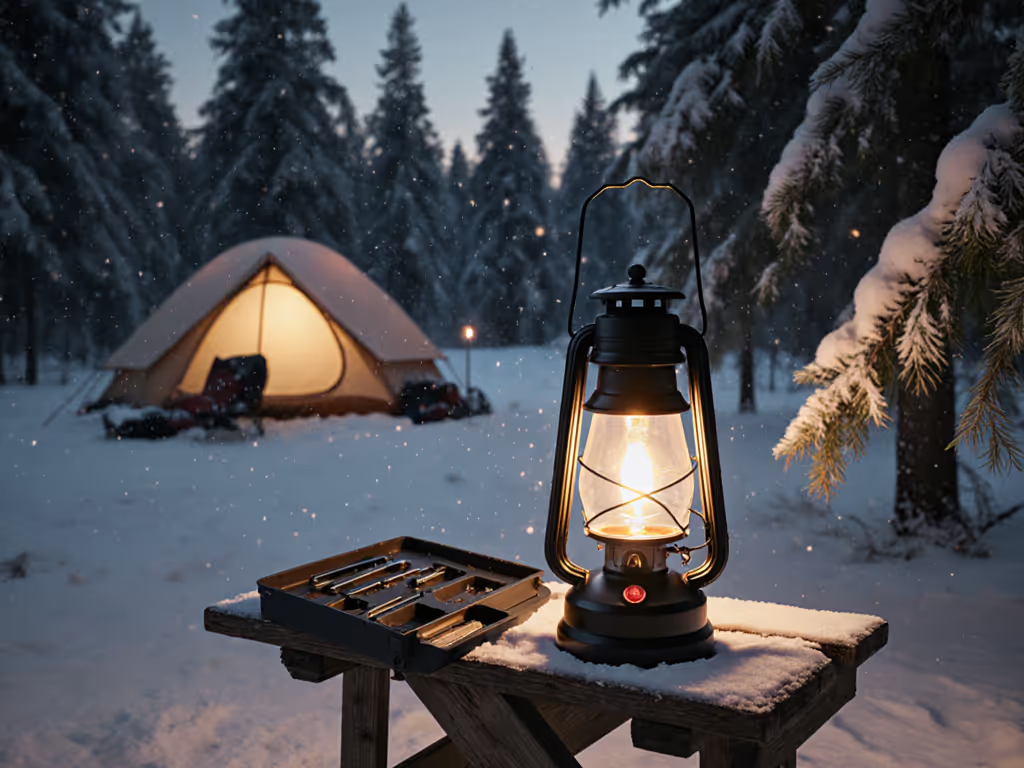
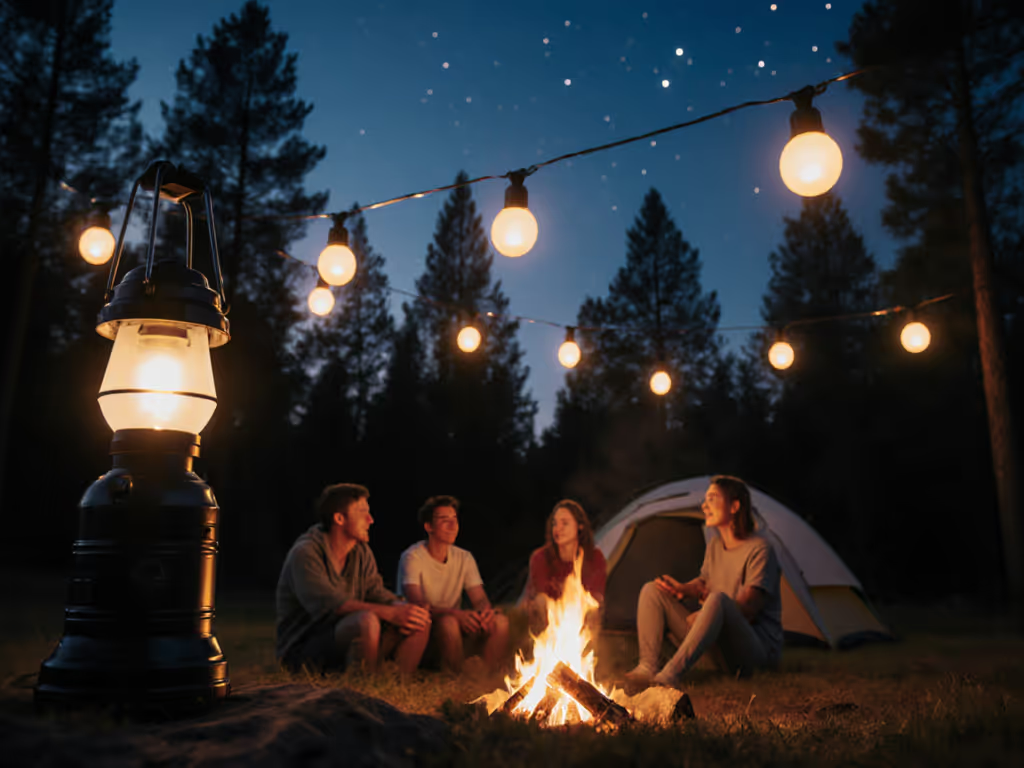
When tent camping lights fail under the ink-black sky, your outdoor lighting system doesn't just go dark, it fractures your entire camp rhythm. Cold hands fumble with dying headlamps, mismatched battery chemistries sabotage your red light protocols, and that single AAA-powered lantern becomes a liability. I've watched frost shrink lithium runtimes to critical levels on high ridges; what saved us wasn't extra cells, but cross-compatible gear that turned weak solar trickle-charges into hours of usable light. For cold conditions, see our winter tent lights battery guide to pick lights that hold capacity below freezing. Forget stacking gadgets. True resilience comes from compatibility, not excess, where energy-harvesting tech solves the root cause of battery anxiety: our dependence on disposable power. This isn't about swapping one battery for another. It's about integrating ambient energy capture into your lighting ecosystem so darkness becomes predictable terrain.
Why Traditional Power Solutions Fail Under Pressure
Battery anxiety for campers isn't just psychological, it's physics. Lithium-ion cells lose 20-40% of rated capacity below freezing, while mismatched voltages in multi-light kits (18650s in lanterns, proprietary packs in string lights) create cascading failures. Worst, inflated "runtime" specs ignore real-world variables: a 500-lumen lantern marketing claim often assumes 0°C operation and 10% battery depth-of-discharge, not the 3°C ambient and 80% draw your group actually uses. Field data confirms this: sustainable lighting advancements must address three failure modes:
- Environmental decay: Cold-induced voltage sag and condensation-induced corrosion
- System incompatibility: Non-standard cells requiring separate chargers/cables
- Energy isolation: Single-source reliance without ambient input
Lab tests show amorphous silicon solar cells outperform crystalline variants indoors (2x higher output under 150 lux LED), proving source-aware harvesting matters. For model-by-model field data on charging speed under clouds and shade, check our solar charging efficiency comparison. Yet 90% of "solar camping lights" use crude crystalline panels optimized for noon sun, not the diffuse twilight hours campers actually need. This isn't an engineering flaw; it's a design oversight ignoring how people camp.
The Energy-Harvesting Shift: Beyond Solar Panels
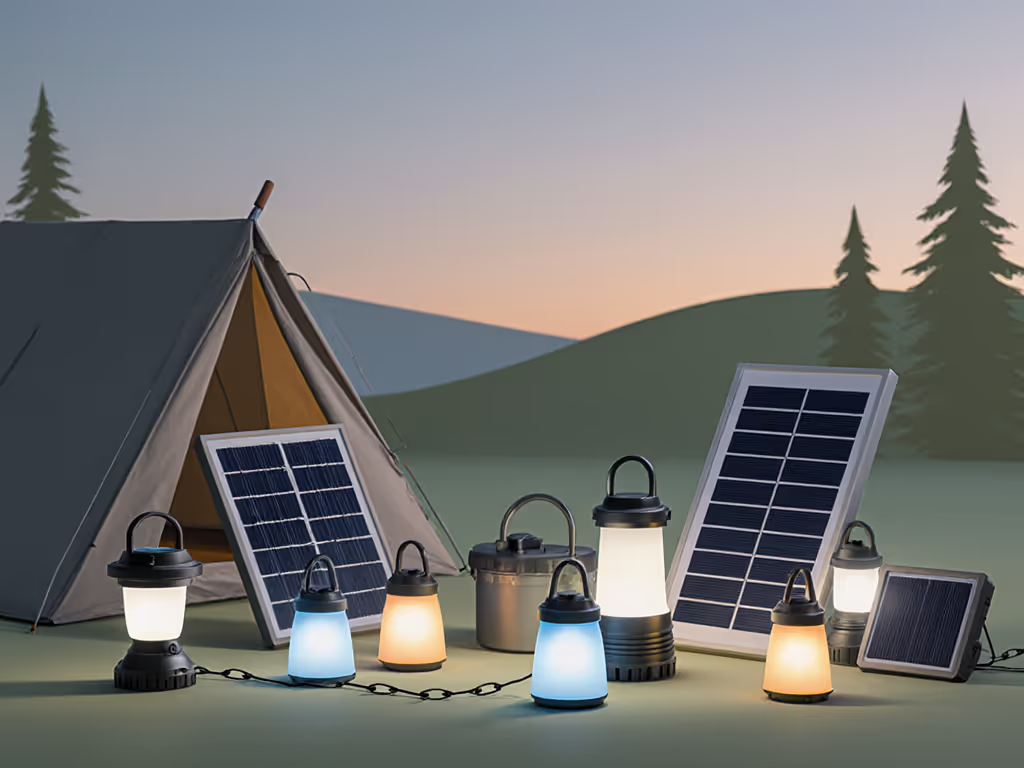
Lighting innovation trends now leverage four ambient sources applicable to campsite scenarios, each with critical trade-offs:
| Energy Source | Output Range | Campsite Application | Key Limitation |
|---|---|---|---|
| Indoor-optimized PV (DSSCs) | 10-100 µW/cm² @ 50-200 lux | Lanterns, task lights | Slow recharge in dense forest cover |
| Flexible perovskite cells | 5-50 µW/cm² @ low light | Clip-on path markers | Degrades after 6+ months UV exposure |
| Thermal harvesters | 1-20 µW/°C delta | Stove-side area lights | Requires active heat source (e.g., fire) |
| RF energy capture | 0.1-5 µW/m² | Sensor-triggered nightlights | Impractical beyond 10m from signal source |
DSSCs (dye-sensitized solar cells) are the game-changer here. Unlike conventional panels, they harvest visible-light efficiently, exactly the spectrum emitted by camp stoves or headlamps. A UK startup's DSSC module achieves 3x higher indoor efficiency than standard tech, converting ambient campfire glow into microwatt-hour reserves. Crucially, these systems integrate power management ICs (PMICs) that prioritize usable low-light output over peak lumens. This means your lantern's amber mode might draw 0.5W while solar trickle-charging at 0.3W, sustaining runtime indefinitely in partial shade. No more "turbo mode" marketing; just verified low-light performance where you need it.
Resilience isn't about surviving darkness, it's about designing systems that make darkness operational.
Building Your Cross-Compatibility Lighting Plan
Forget "battery-free" claims. Real-world camping light LED systems require redundant power pathways with shared compatibility. Here's the field-tested decision tree: If you want verified performance before choosing gear, see our camping lantern runtime comparison.
- Prioritize light-harvesting compatibility over peak output:
- Choose lanterns with USB-C output and input (not Micro-USB dead ends)
- Verify DSSC panels work at 50-100 lux (typical campsite illumination)
- Demand runtime graphs at 5, 15, and 30 lumens, not 500-lumen "max"
- Standardize your storage layer:
- Use 18650 cells with IMR chemistry (better cold performance)
- Never mix cell brands/vintages, capacity mismatch kills groups
- Implement a "warm pocket" protocol for frozen spares (like that ridge scenario)
- Layer ambient inputs:
- Morning: Crystalline solar panels for bulk charging
- Dusk: DSSC cells harvesting campfire/tent glow
- Night: Thermal harvesters on water bottles (stove-heated)
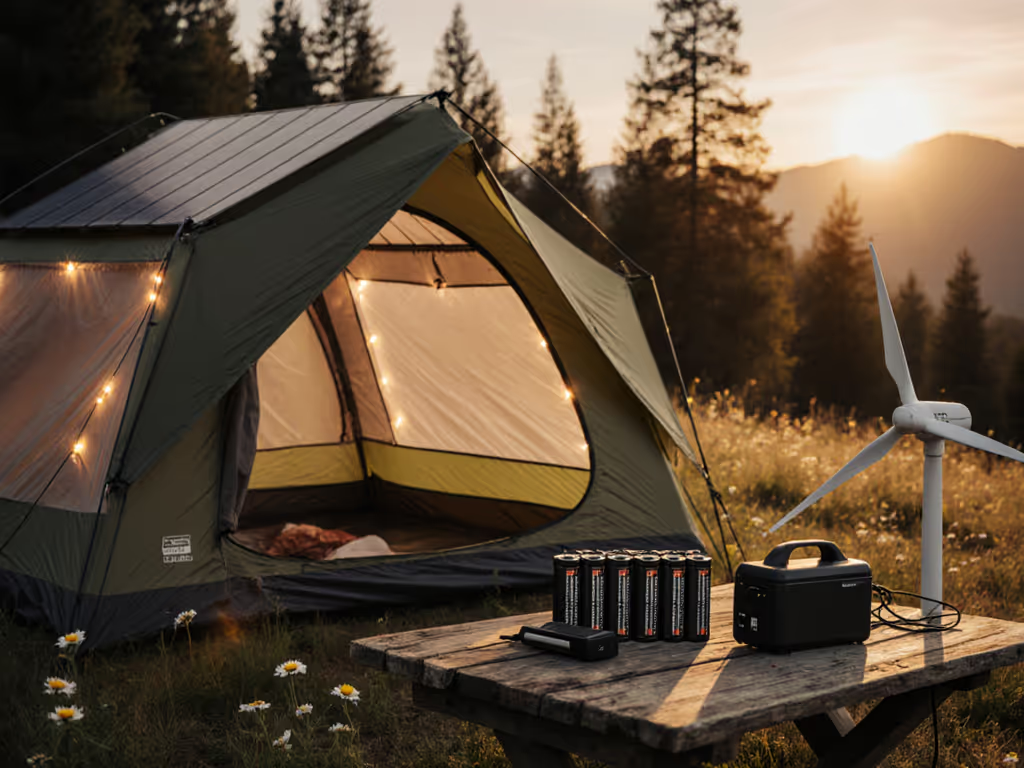
This is where most kits fail. Two is one if they share a charger, but only when your solar harvester, power bank, and lights all use USB-C PD 3.0. If you depend on lanterns that double as power banks, our USB power hub lanterns test ranks real charging output and stability. I've seen groups stranded because one lantern's proprietary input couldn't accept energy from a shared power bank. Compatibility beats capacity. Recent energy-harvesting chips (like e-peas') now achieve 85%+ conversion efficiency in low-light scenarios, enough to sustain 15-lumen path lights all night from residual tent glow. But without standard connectors, that energy stays trapped.
Your Pre-Trip Power Checklist
Execute this 48-hour ritual to eliminate battery anxiety:
- Verify ambient compatibility: Place each light under your tent's mesh ceiling. Does the DSSC panel charge from internal LED sources?
- Test cold resilience: Run all lights at 5°C for 1 hour. Note voltage drop (healthy = <15%)
- Cross-charge simulation: Connect harvester → power bank → light. Confirm stable wattage transfer
- Redundancy audit: Remove one light. Can others cover critical functions via USB-C passthrough?
This isn't optimization, it's essential systems thinking. Last season, a scout group avoided total blackout when their main lantern died because a perovskite-powered nightlight maintained 3-lumen path markers using only residual heat from sleeping bags. No extra batteries. Just compatibility.
Action Now: The 3-Step Integration Plan
Don't wait for your next trip to face darkness unprepared. Execute these steps before your next outing:
-
Retrofit one light: Replace your brightest lantern with a DSSC-compatible model (e.g., those with Sharp-derived III-V materials). Verify it draws power from internal camp lights.
-
Standardize your cell bank: Buy 4x quality 18650 cells. Label them with charge cycles. Store in a neoprene pocket, not cold ground contact.
-
Map your campsite energy: Sketch light sources (stove, headlamps, stars) at your usual site. Position harvesters where they'll catch ambient glow during critical hours.
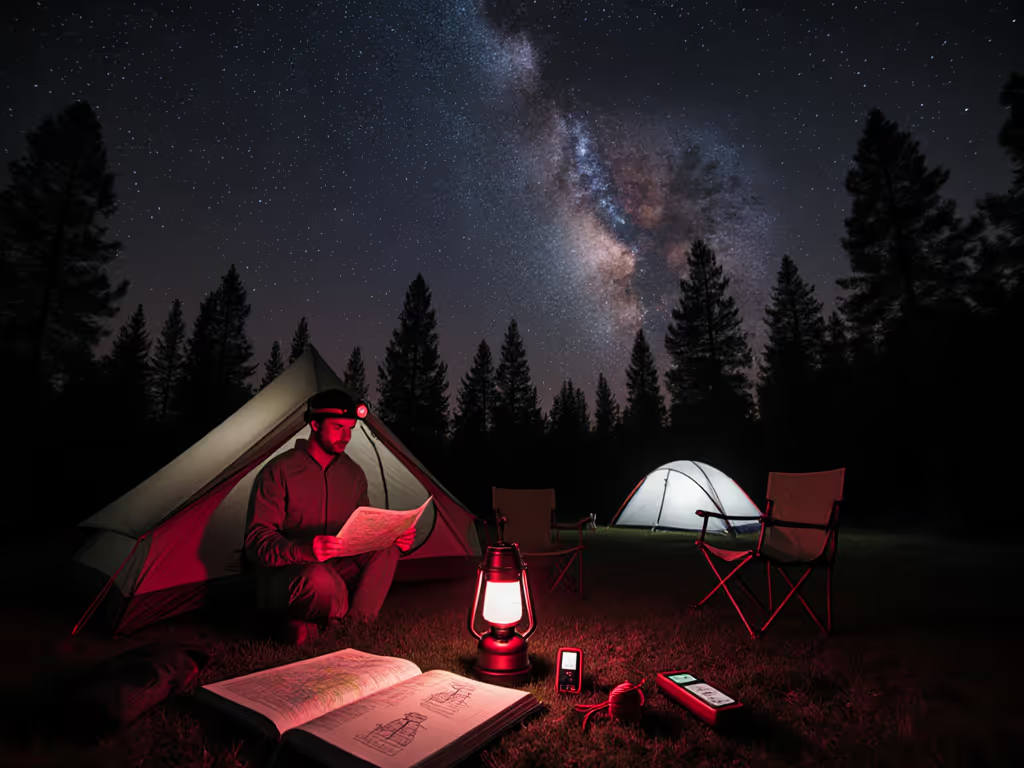
Dark-sky compliance isn't just neighborly, it's tactical. Learn the fundamentals and product picks in our dark-sky camping lighting guide. Warm-white/red lights with harvesting preserve night vision while capturing more usable energy than cool-white blasters. And when clouds roll in? That's why you standardized cells. Plan for dark, and darkness will plan for you. Your tent camping lights aren't just preventing anxiety, they're making darkness habitable.
Related Articles